
Cabinet assembly methods shape how long cabinets last, how they look, and how much they cost more than many realize. Planning a kitchen remodel or setting up cabinets for a business means the way parts fit together and get finished changes how they hold up every day for years. Professionals and manufacturers use different techniques that impact strength and style in surprising ways. Learning these secrets helps anyone choose cabinets that fit their needs and budget. Keep reading to uncover tips that can save money and boost satisfaction with your space.
I will compare construction styles, explain common joinery options, list tools and fasteners that matter, and offer practical installation tips. Examples and clear trade offs will help you match method to project goals, whether you favor speed, longevity, or a particular aesthetic.
Understanding Cabinet Assembly Methods and Why They Matter
Assembly method includes how box panels attach, how doors and drawers connect to the frame, and how hardware mounts. The method chosen affects strength, resistance to humidity, serviceability, and the visible look at joints and seams. For instance, a cabinet built with dovetail drawer boxes and plywood panels is likely to outlast a similar unit made with particleboard and butt joints.
Beyond materials, the assembly workflow matters for timeline and cost. Shop assembled units give tighter joints and consistent quality while on site assembly can reduce transport cost for large installations. Modular flat pack units reduce labor on site but may require more frequent tightening or reinforcement over time.
Framed Versus Frameless Construction Explained
Two popular box styles dominate residential markets. Framed cabinets use a face frame on the front of the box with doors attached to that frame. Frameless cabinets use thicker box materials and attach doors directly to the box edges, offering more internal access. Each style has trade offs in terms of appearance, hardware options, and ease of installation.
Framed cabinets offer a traditional look and hide some imperfections when walls are uneven. Frameless cabinets usually provide cleaner lines and slightly more storage space inside due to the lack of a face frame. Consider the finish you want, the hardware you plan to use, and how the cabinet will be installed when choosing between these two options.
Common Joinery Techniques and Where to Use Them
Joinery methods range from simple mechanical fasteners to traditional woodworking joints. Knowing the strengths and typical applications helps in specifying or evaluating quotes.
Mechanical Fasteners
Pocket screws, confirmat screws, and cam lock systems are common in factory line production and flat pack furniture. They are fast to install and work well with composite panels. Pocket screws are quick and provide good pull strength when used in face frames or where access for screws is possible. Cam lock systems speed assembly of knock down cabinets but may loosen over many cycles unless reinforced.
Wood Joinery Options
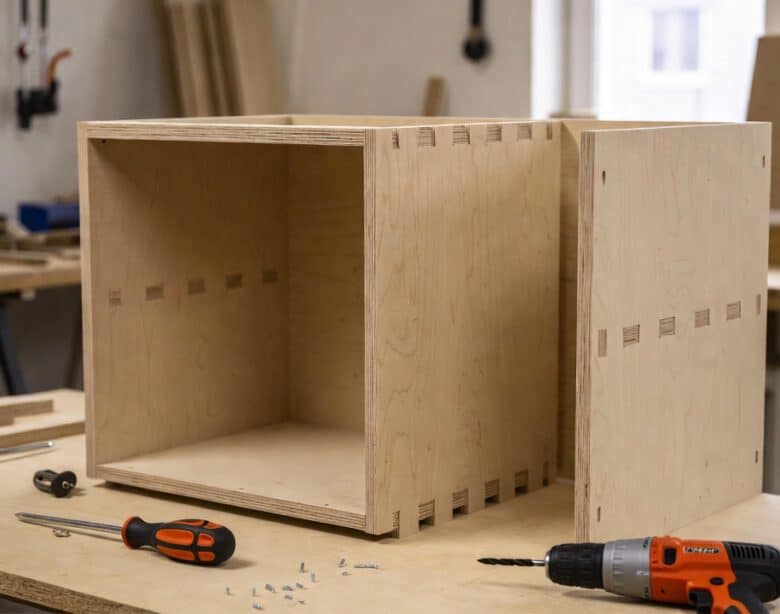
Dovetail joints remain a benchmark for drawer construction. Dado and rabbet joints are commonly used for joining shelves and backs to sides because they increase gluing surface and add mechanical strength. Dowels and biscuits are often used with plywood panels to improve alignment and glue strength while keeping an appearance free of visible fasteners.
Flat Pack Versus Factory Preassembled Units
Flat pack units arrive unassembled and save shipping space and cost. They are a popular choice for tight budgets and for DIY installation. The trade off is assembly time and sometimes lower initial rigidity compared with factory assembled boxes. If you plan to move frequently or need rapid installation, flat pack units can be practical.
Factory preassembled cabinets are assembled under controlled conditions with proper clamping and gluing protocols. This can yield better joint quality and less variance between units. If you have ambitious design details or require tight tolerances, preassembled units typically reduce site work.
Materials and Their Role in Assembly Choices
The panel material affects which methods work best. Plywood bonds well with traditional woodworking joinery and holds screws under tension. Medium density fiberboard offers a smooth paintable surface and works well with cam locks and confirmat screws. Particleboard is cost effective but weaker where hardware bears loads, so it is often reinforced at mounting points or used where loads are light.
- Use plywood for high traffic kitchens and where humidity changes are expected
- Use MDF where you want painted doors with fine detail
- Consider composite panels for budget constrained layouts with careful reinforcement at hardware locations
Tools and Fasteners That Make a Difference
Certain tools speed assembly and improve outcomes. A pocket hole jig provides strong angled screw joinery for face frame work. A biscuit joiner helps with alignment across wide panels. A quality panel saw or CNC cut parts reduce fitting time on site.
Fasteners and Hardware Tips
Choose hardware based on expected loads and usage patterns. Full extension drawer slides rated for higher weight prevent sagging when drawers are loaded with heavy cookware. Soft close hinges and slides extend life by reducing slamming but check the mounting plate and screw length for compatibility with your box material. Use corrosion resistant screws for installations near water sources.
Simple Techniques That Improve Longevity
Reinforcing screw points with small glued blocks inside the box extends life when mounting heavy items or when doors receive frequent use. Seal exposed plywood edges with thin coats of sealant to reduce moisture ingress. Fasteners combined with glued joints usually outperform fasteners alone, so apply a suitable adhesive when possible and clamp during cure time.
Installation Tips From the Trade
Small details during installation prevent common problems. Check walls and floors for level and plumb; shim cabinets to create a consistent reveal and to prevent undue load on adjacent units. Attach hanging rails or sturdy brackets to studs when possible; drywall anchors can work for light loads but limit capacity. When aligning doors and drawers set up a plan for hinge adjustment to avoid repeatedly loosening screws to correct gaps.
Label panels during installation to speed the process and avoid mismatches that can lead to rework. Dry fit critical assemblies before final fastening. In large projects create a fastener and hardware checklist to confirm you have correct screw lengths and hinge plates on site before the crew begins.
Choosing the Right Method for Your Project
Select a method based on three factors perceived by many professionals. First, expected lifespan and frequency of use. Second, budget including labor cost and delivery constraints. Third, appearance and how visible joints will be in the finished space.
For a high use kitchen where long life is a priority choose joinery and materials that favor strength, such as dovetail drawers and plywood boxes with glued and screwed joints. For a small rental unit with tight budget and rapid turnover consider flat pack units that are economical and replaceable. If you prefer to limit site work and get high consistency in finish, choose preassembled units delivered ready to mount.
If you are local to the Orlando region and want a professional evaluation or on site assembly options consider contacting a specialist who can review layouts, suggest methods, and provide a written estimate. A company like Orlando Custom Cabinets can explain assembly choices and match options to your timeline and budget while showing real examples of finished installations.
Cost and Timeline Considerations
Time is money when it comes to cabinet assembly. Shop assembled units reduce installation time but add transport handling and possibly set up fees for articulated deliveries. Flat pack consoles increase on site labor and can extend project timelines if skilled labor is limited.
Factor in lead times for special ordered hardware and doors. Some finishes require extra curing time before panels can be handled or installed, which affects schedule. Always add contingency days for unforeseen site adjustments and final fitting of doors and drawer fronts.
In summary there is no single best cabinet assembly method. Each option trades off cost, speed, and longevity. Understanding the common joinery types, the behavior of different panel materials, and how hardware choices interact with assembly will help you specify cabinets that meet functional and aesthetic goals. Prepare by listing priorities, requesting sample assemblies from suppliers, and confirming fastener and hinge specifications before ordering. For hands on help or to review design and assembly plans with a local supplier reach out to a trusted installer or manufacturer so you can compare quotes and timelines.


